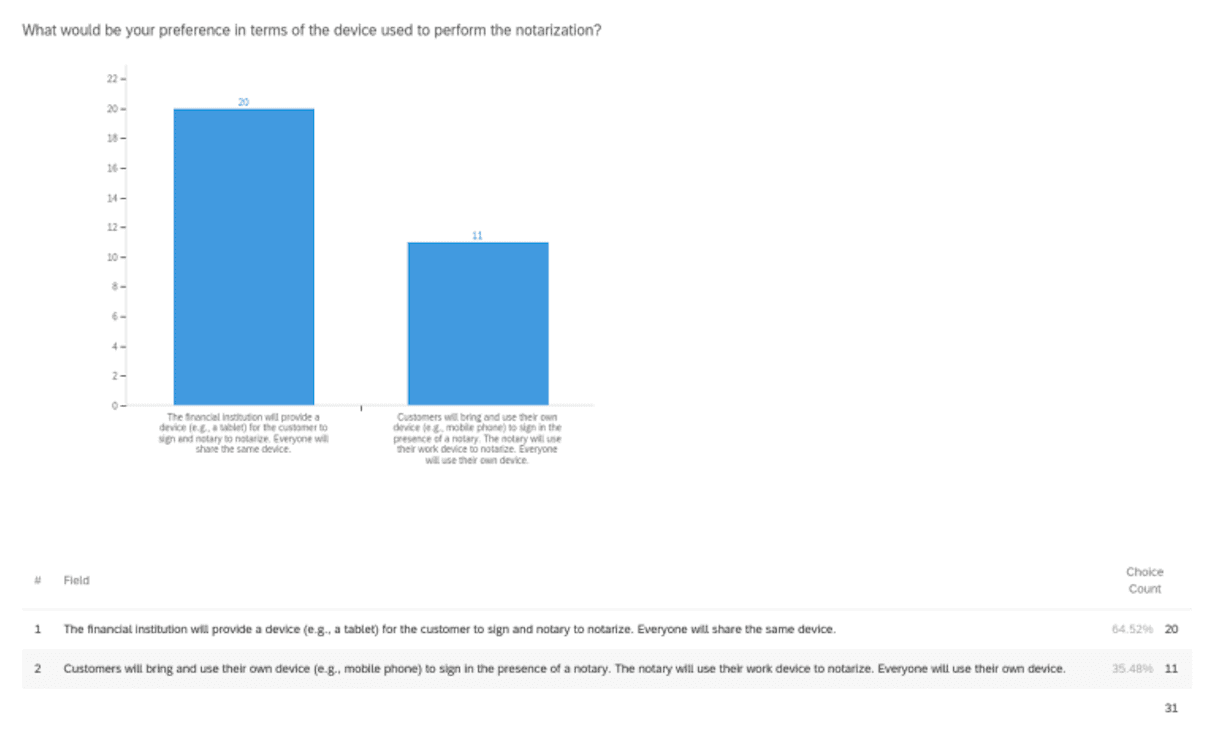
Our research team interviewed 31 notaries and 47 signers to get an idea of their priorities surrounding the notarization experience, specifically regarding device usage. Do notaries prefer signers to bring their own devices to sign on, or do they prefer their organization to provide a device for the signer and notary to share for the session? And do signers prefer to be provided a device, or bring their own?
Our research team interviewed 31 notaries and 47 signers to get an idea of their priorities surrounding the notarization experience, specifically regarding device usage. Do notaries prefer signers to bring their own devices to sign on, or do they prefer their organization to provide a device for the signer and notary to share for the session? And do signers prefer to be provided a device, or bring their own?
Our research team interviewed 31 notaries and 47 signers to get an idea of their priorities surrounding the notarization experience, specifically regarding device usage. Do notaries prefer signers to bring their own devices to sign on, or do they prefer their organization to provide a device for the signer and notary to share for the session? And do signers prefer to be provided a device, or bring their own?
In the notary interviews, we discovered preference for the shared device option. Participants cited margin for error, control over the session, and accessibility to personal devices as reasons for preferring this option.
In the notary interviews, we discovered preference for the shared device option. Participants cited margin for error, control over the session, and accessibility to personal devices as reasons for preferring this option.
In the notary interviews, we discovered preference for the shared device option. Participants cited margin for error, control over the session, and accessibility to personal devices as reasons for preferring this option.
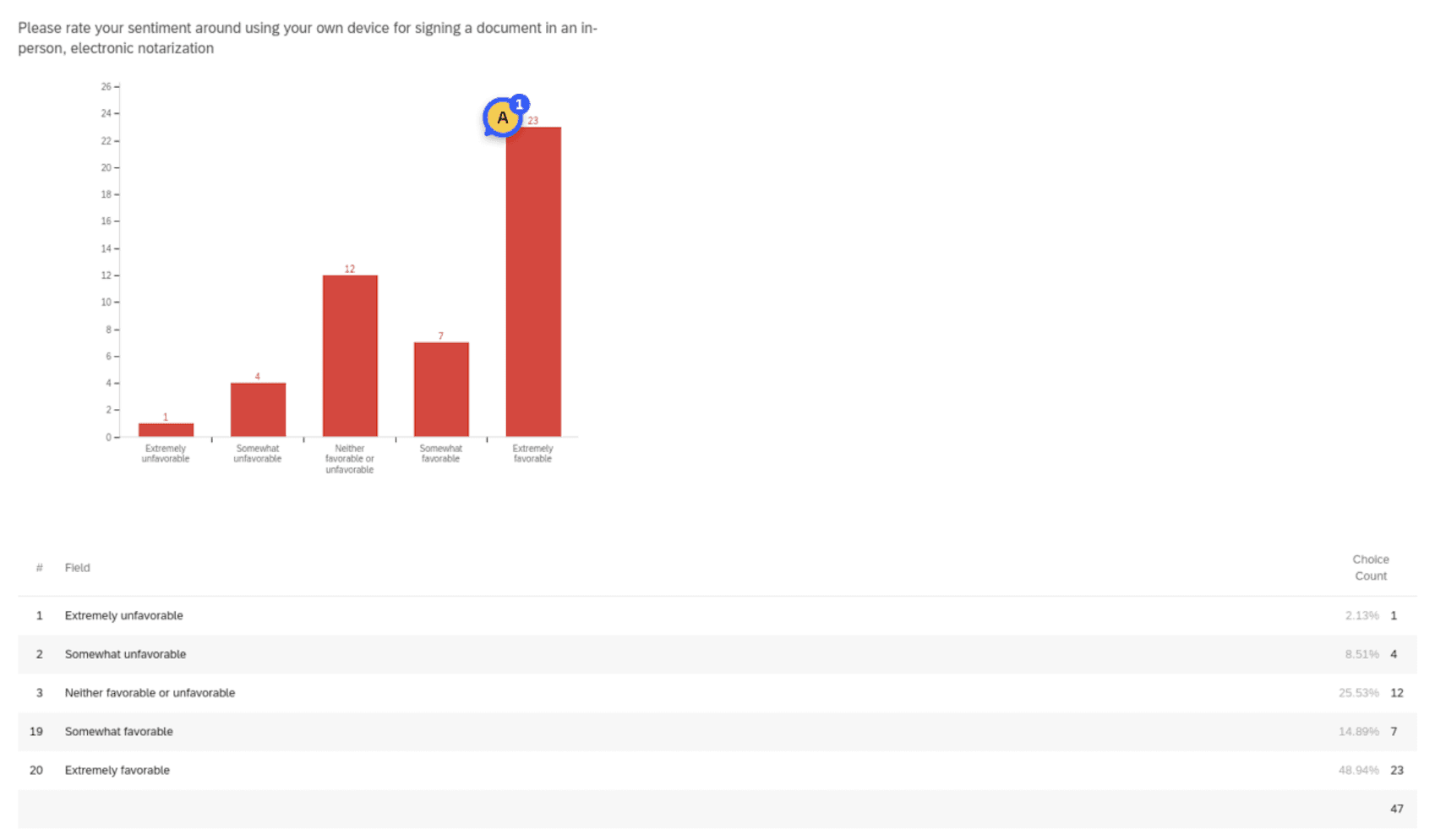
While results were fairly split, signers showed preference for the independent devices option.
While results were fairly split, signers showed preference for the independent devices option.
While results were fairly split, signers showed preference for the independent devices option.
Faced with conflicting data, design and research teamed up to assess concerns and determine priorities based on user interviews. Many of the notaries cited security concerns, session control, and efficiency as main considerations for the session experience.
Faced with conflicting data, design and research teamed up to assess concerns and determine priorities based on user interviews. Many of the notaries cited security concerns, session control, and efficiency as main
Faced with conflicting data, design and research teamed up to assess concerns and determine priorities based on user interviews. Many of the notaries cited security concerns, session control, and efficiency as main
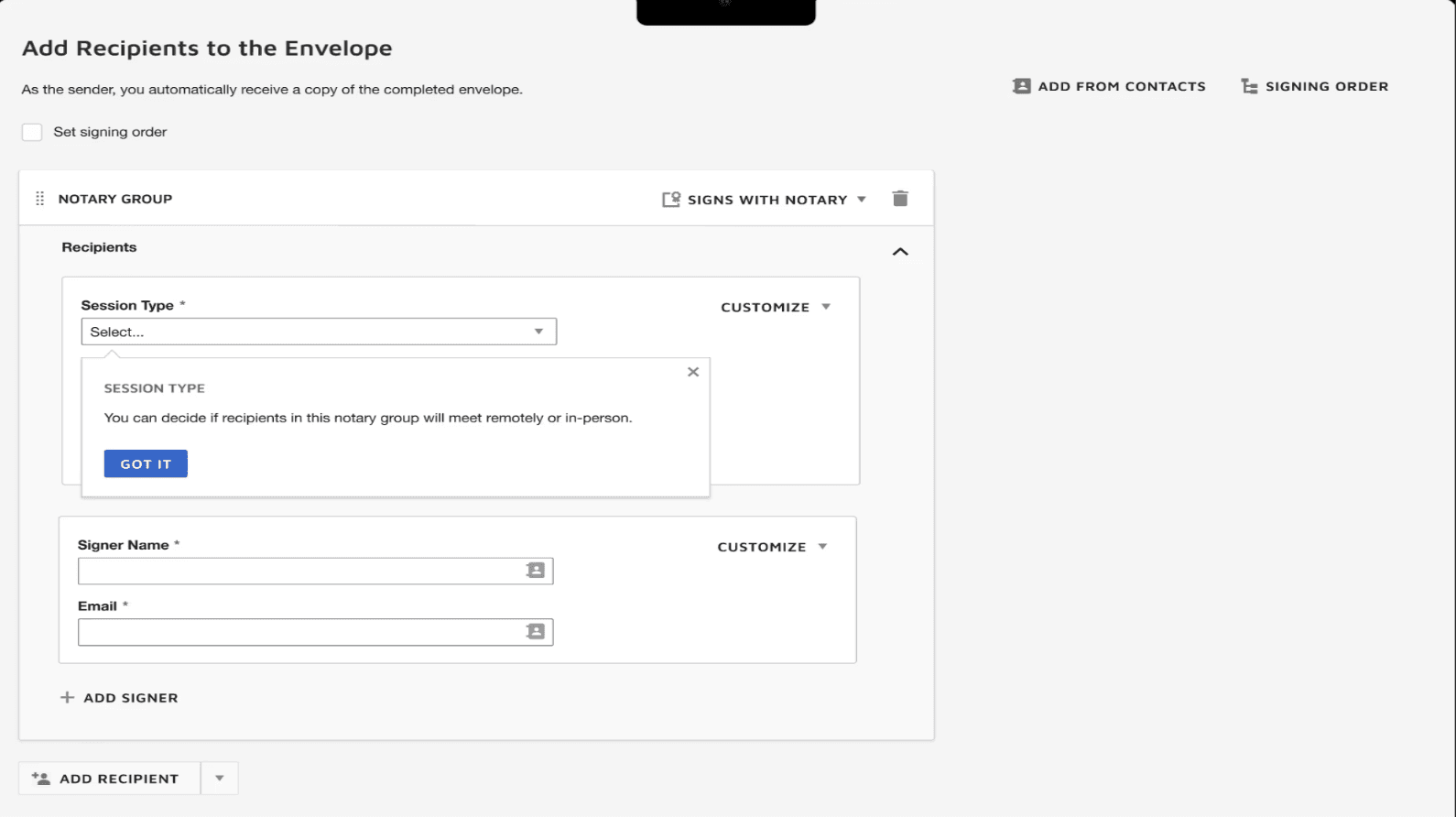
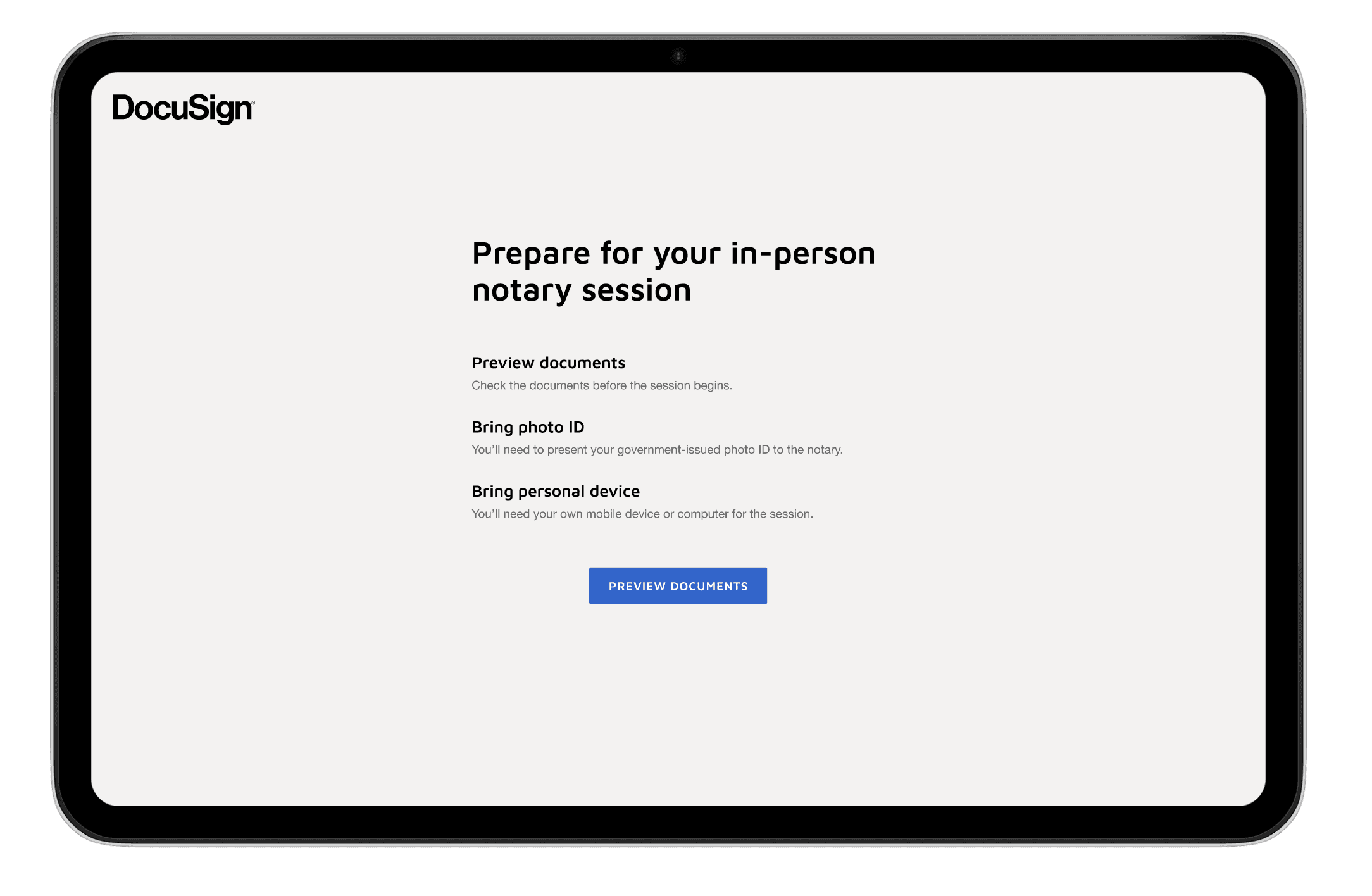
Based on the user interviews and collaboration with our research team, I landed on a multi-device approach for the MVP design phase. Notary and signer join session via secure email link. Notary confirms the signer is present, verifies their identity, and fills out required session information while signer can preview the document. Then the document can be signed and notarized.
Based on the user interviews and collaboration with our research team, I landed on a multi-device approach for the MVP design phase. Notary and signer join session via secure email link. Notary confirms the signer is present, verifies their identity, and fills out required session information while signer can preview the document. Then the document can be signed and notarized.
Based on the user interviews and collaboration with our research team, I landed on a multi-device approach for the MVP design phase. Notary and signer join session via secure email link. Notary confirms the signer is present, verifies their identity, and fills out required session information while signer can preview the document. Then the document can be signed and notarized.
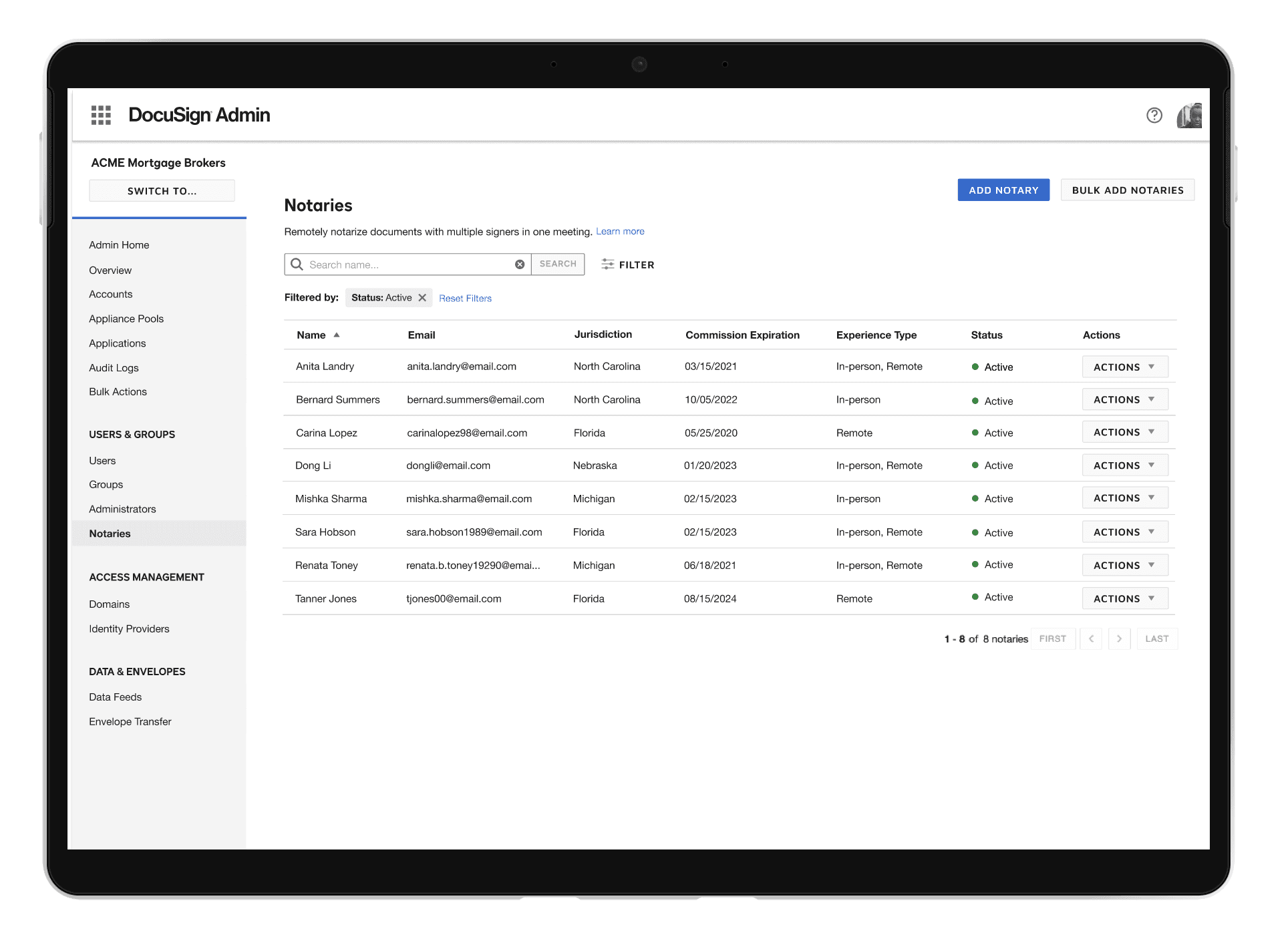
Admin screen for organizations to view and manage their registered notaries. Admins can see which experience type(s) their notaries are commissioned for: RON, IPEN, or both.
Admin screen for organizations to view and manage their registered notaries. Admins can see which experience type(s) their notaries are commissioned for: RON, IPEN, or both.
Admin screen for organizations to view and manage their registered notaries. Admins can see which experience type(s) their notaries are commissioned for: RON, IPEN, or both.
Before the session can begin, notary legally must confirm the signer is physically present. If they are not, they cannot proceed with the document and must exit the session.
Required close collaboration with UX writers to provide workaround before plans to build in rescheduling functionality or stronger customer support.
Before the session can begin, notary legally must confirm the signer is physically present. If they are not, they cannot proceed with the document and must exit the session.
Required close collaboration with UX writers to provide workaround before plans to build in rescheduling functionality or stronger customer support.
Before the session can begin, notary legally must confirm the signer is physically present. If they are not, they cannot proceed with the document and must exit the session.
Required close collaboration with UX writers to provide workaround before plans to build in rescheduling functionality or stronger customer support.
Notary Commission Creation
Notary Commission Creation
Notary Commission Creation
Original notary commission creation screen to register in their organization.
Original notary commission creation screen to register in their organization.
Original notary commission creation screen to register in their organization.
Redesigned commission creation to adhere to new design system, and accommodate for jurisdictions with only one commission type available.
Redesigned commission creation to adhere to new design system, and accommodate for jurisdictions with only one commission type available.
Redesigned commission creation to adhere to new design system, and accommodate for jurisdictions with only one commission type available.